Signs and damage symptoms of Grape downy mildew
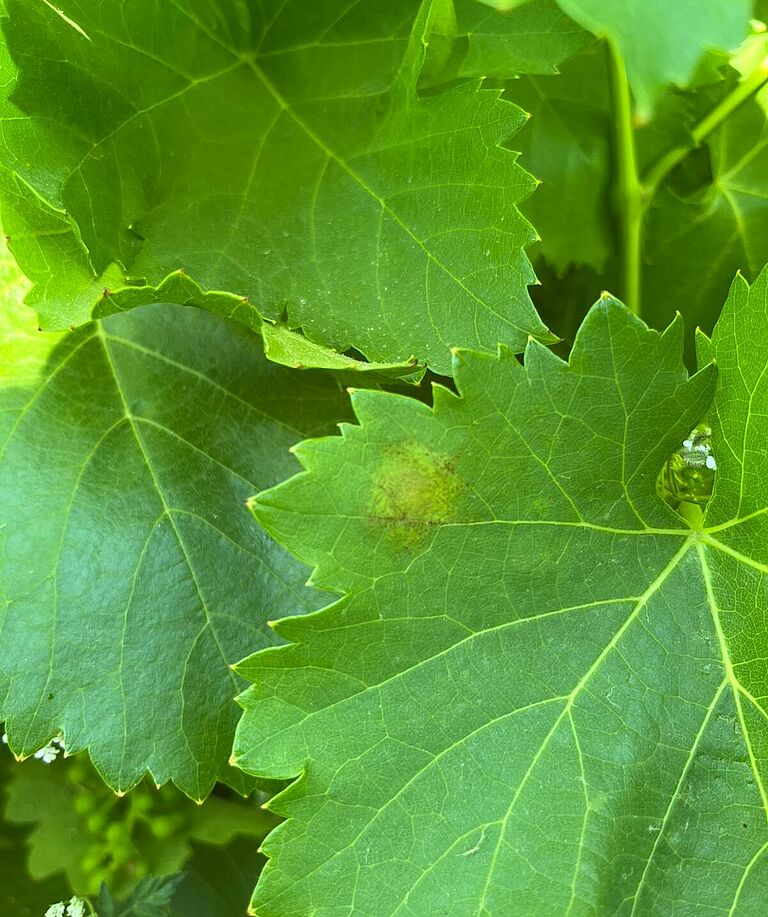
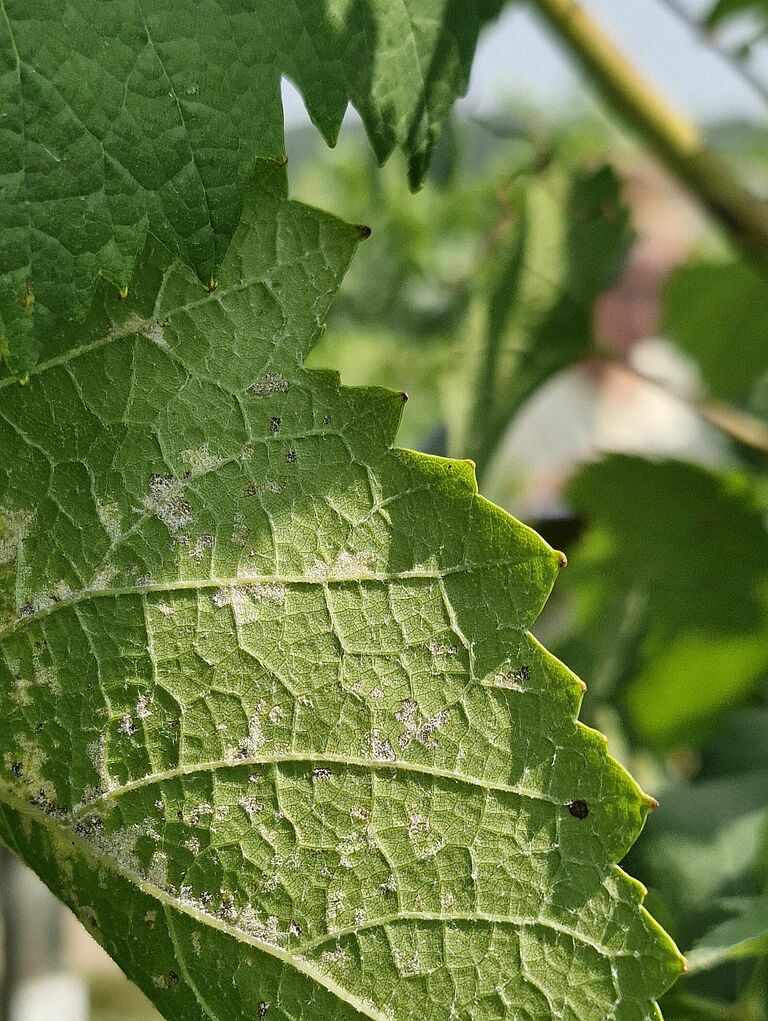
Symptoms of grape downy mildew (Plasmopara viticola) vary according to the crop’s growth stage, environmental conditions, and infection pressure. While all green tissues of the grapevine are susceptible, characteristic ‘oil spots’ on the upper surface of young, actively growing leaves, followed by downy white growth on the underside, are typical early symptoms. Because visible symptoms usually appear 7–10 days post-infection (depending on temperature and humidity), the disease is often well-established before it can be visually detected in the field.
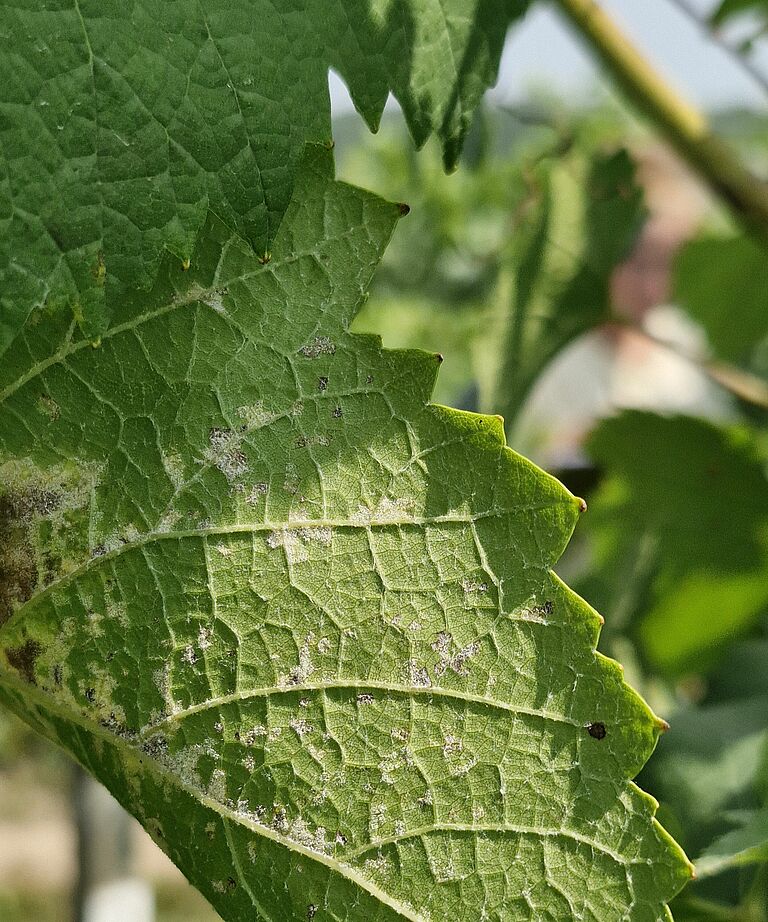
Leaf symptoms
- Yellowish to light-green oil spots on the upper leaf surface, often angular and limited by leaf veins
- White to greyish downy growth on the underside of leaves under humid conditions
- Spots turning brown and necrotic as the disease progresses
- Premature leaf drop in severe infections, reducing photosynthesis and vine vigor
Shoot and tendril symptoms
- Brown to dark lesions on young shoots and tendrils
- Distorted or stunted shoot growth
- Increased susceptibility of infected tissue to secondary infections
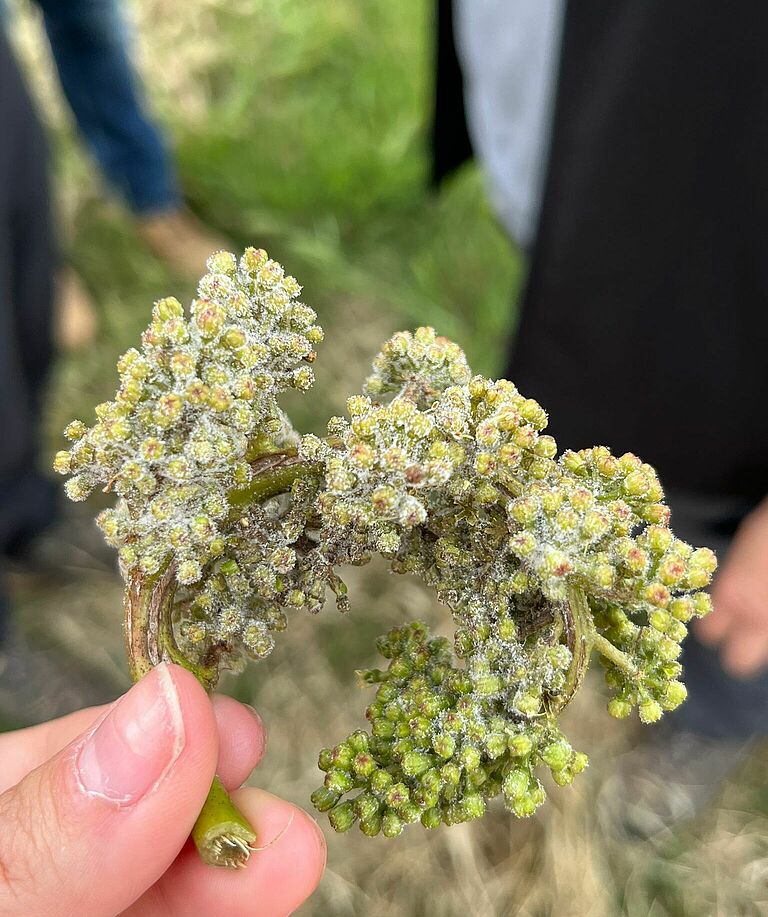
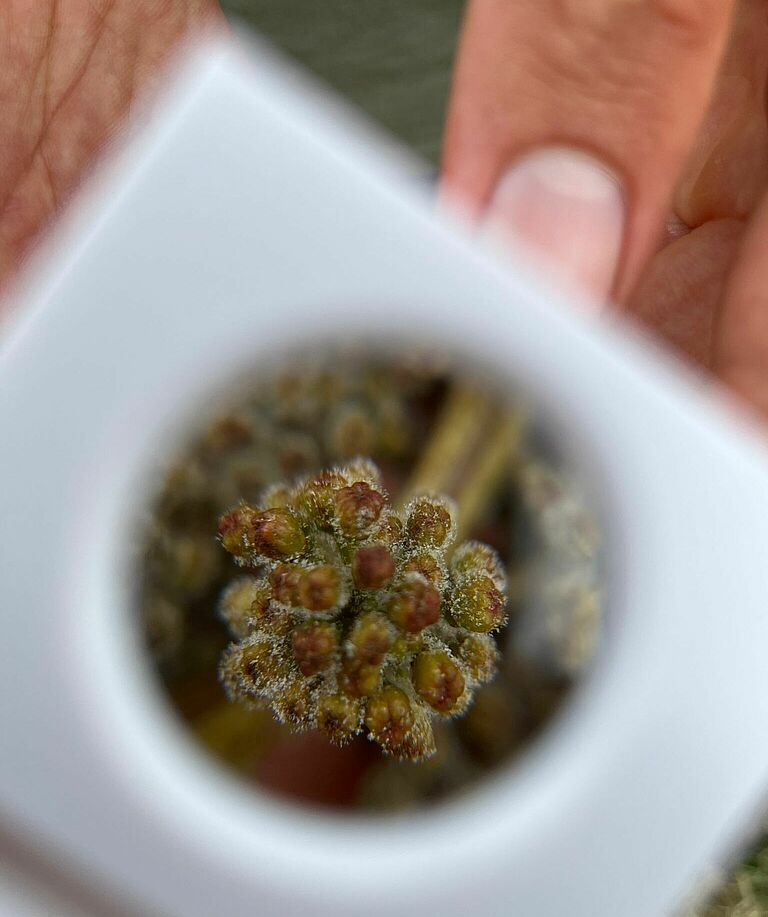
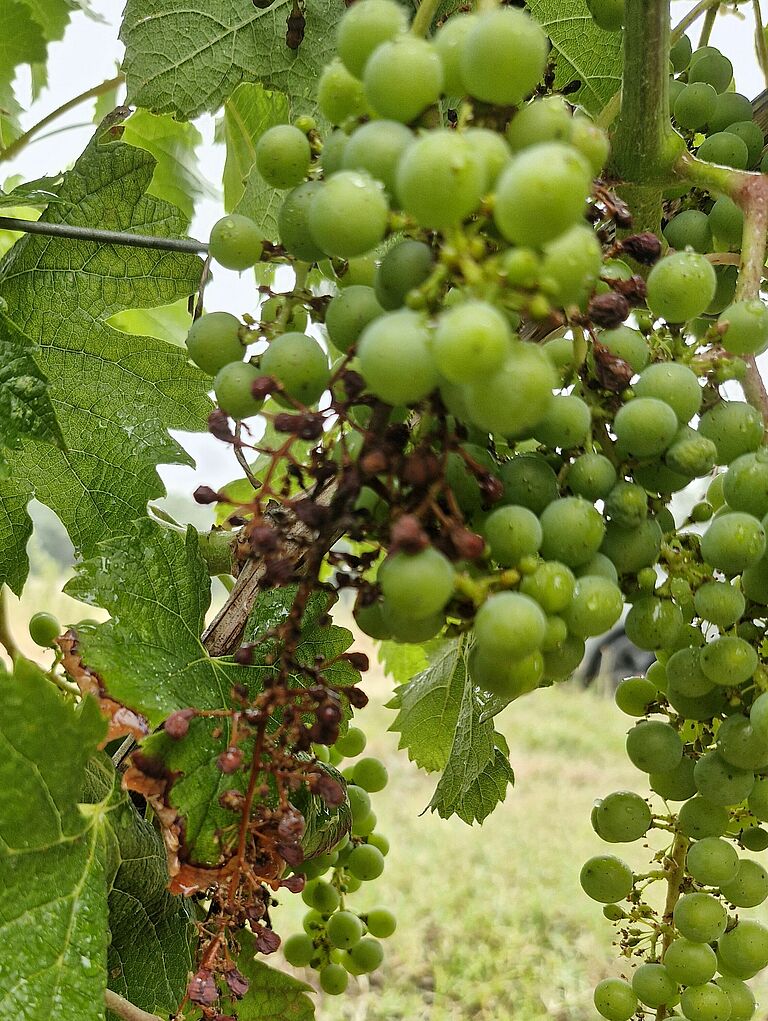
Flower and cluster symptoms
- Infection of inflorescences and young clusters, particularly around flowering
- Browning, drying, and collapse of flower clusters
- Poor fruit set and uneven cluster development
Berry symptoms
- Young berries turning greyish-brown and shriveling
- Infected berries remain small and fail to ripen
- Clusters appear sparse due to early berry loss