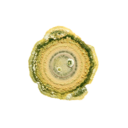
About Used for lawns and sports fields, such as stadiums, golf courses, horse-racing tracks, athletic grounds, cricket pitches and football fields, turf provides the perfect base for a wide variety of
sunrise or after 10:00 in the morning, depending on the system you use to control the opening or closing of the hives. The bumblebee hives should be closed [...] correct height. The transmitter of the Wireless BeeHome system can be controlled in different ways. Either by using a timer or by connecting the transmitter [...] is at its minimum. The opening and closing system is pneumatic and is controlled by a timer or the climate computer. On a rare occasion, when air pressure
General The cotton leafworm (Spodoptera littoralis) is a highly polyphagous species feeding on plants of 40 families, containing 87 species of economic importance. It originates in Egypt, and is curre
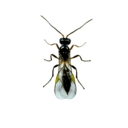
Pests Especially for cotton aphid ( Aphis gossypii) ; tobacco aphid ( Myzus persicae var. nicotianae ); peach-potato aphid ( Myzus persicae var. persicae ). Mode of action Adult parasitic wasps emerge
Pests Two-spotted spider mite ( Tetranychus urticae ) and other Tetranychus spp., except Tetranychus evansi . Mode of action Predatory mites use their piercing mouthparts to extract the conten
General Stable flies belong to the genus Stomoxys , Latin for “sharp mouth”; a fitting moniker, as these flies are the only members of the Muscidae family that feed on mammalian blood (particularly ca
Pests Young larvae of various thrips species. Crops Do not use in tomato. Mode of action Predatory mites use their piercing mouthparts to extract the contents of their prey. Pack size 50,000; 100,000;
General The fall armyworm is a polyphagous pest that is indigenous throughout the Americas. Recently, it has been found in Africa too. The caterpillars of fall armyworms feed on the leaves, stems and
General The diamond back moth (Plutella xylostella) belongs to the family of Plutellidae . It only attacks Brassicaceae species, including cruciferous weeds. The diamond back moth (Plutella xylostella