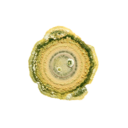
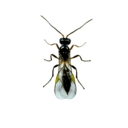
Overview The corn earworm is a major pest affecting over 100 crops, of which the most prominent varieties are corn, sorghum, cotton, aubergine, pepper, and tomato. They primarily feed on flowers and f
more info on Spidex Vital Spidex Vital: Your Vital partner in spider mite control A true pioneer in the biocontrol of spider mite, Koppert Biological Systems [...] week 13 for the rest of our customers worldwide. Spidex Vital gives better control of spider mite hotspots by building populations with improved egg-laying
General The cotton leafworm (Spodoptera littoralis) is a highly polyphagous species feeding on plants of 40 families, containing 87 species of economic importance. It originates in Egypt, and is curre
producers millions of euros in production losses worldwide, can now be controlled in an effective and sustainable way with a non-synthetic fungicide that [...] applied directly to leaves, blossom and fruits of the plant. It effectively controls Botrytis in grapes and soft fruits such as strawberries and blueberries
General Stable flies belong to the genus Stomoxys , Latin for “sharp mouth”; a fitting moniker, as these flies are the only members of the Muscidae family that feed on mammalian blood (particularly ca
Cryptobug is the best weapon on the market for the effective biological control of mealybugs . Operation Mealybug has begun! Mealybugs are a feared enemy [...] reduced harvests. Their protective waxy coating makes mealybugs difficult to control with chemicals, particularly in dense crops where it is hard to reach them
General The fall armyworm is a polyphagous pest that is indigenous throughout the Americas. Recently, it has been found in Africa too. The caterpillars of fall armyworms feed on the leaves, stems and
General The diamond back moth (Plutella xylostella) belongs to the family of Plutellidae . It only attacks Brassicaceae species, including cruciferous weeds. The diamond back moth (Plutella xylostella
General The Asian citrus psyllid, ( Diaphorina citri ), is an important pest of citrus in several countries as it is a vector of a serious citrus disease called greening disease or Huanglongbing. It i