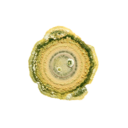
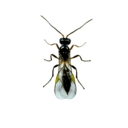
General The cotton leafworm (Spodoptera littoralis) is a highly polyphagous species feeding on plants of 40 families, containing 87 species of economic importance. It originates in Egypt, and is curre
General Stable flies belong to the genus Stomoxys , Latin for “sharp mouth”; a fitting moniker, as these flies are the only members of the Muscidae family that feed on mammalian blood (particularly ca
Marketing, Martin Koppert Director Agri, and Joram Oosthoek Director Finance & Control. René Koppert and René Ruiter will take up the position of Director Horti [...] Corporate Marketing Robert Pathuis CFO Joram Oosthoek Director Finance & Control Henri Oosthoek CEO Paul Koppert CEO
General The fall armyworm is a polyphagous pest that is indigenous throughout the Americas. Recently, it has been found in Africa too. The caterpillars of fall armyworms feed on the leaves, stems and
General The diamond back moth (Plutella xylostella) belongs to the family of Plutellidae . It only attacks Brassicaceae species, including cruciferous weeds. The diamond back moth (Plutella xylostella
loupes. Our slogans— Pesticide Reduction For Cannabis Production and BioControls for Large Scale Commercial Grows —brought in a lot of traffic. Judging [...] possible solutions. Koppert consultants show up because it’s important. Pest control is Job One in their book of business, so site visits are actively encouraged [...] environment, keeping the focus on pesticide reduction by using key biological control agents like Swirski-Mite and Isarid ™ to fight insect pests and fungi that
General The Asian citrus psyllid, ( Diaphorina citri ), is an important pest of citrus in several countries as it is a vector of a serious citrus disease called greening disease or Huanglongbing. It i
General Trichoplusia is not only a damaging pest in crucifers, their favourite host, it can also be found in crops such as tomato, pepper, some cucurbits, soybean, sesame and cotton. One of the reason
General Pseudococcus longispinus occurs naturally in tropical and sub-tropical regions, but these days it is widespread throughout the world. The range of host plants of Pseudococcus longispinus is le