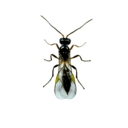
aphidimyza The gall midge Aphidoletes aphidimyza is most effective between 20 and 30°C (68 and 86°F), effectivity decreases significantly at higher temperatures
environmental conditions. To evaluate pollination progress, collect approximately 20 closed flowers from different areas. It is essential that all closed flowers
at the consumption level. In the case of fruits and vegetables, more than 20% is lost. At Koppert, we are well aware of these losses and play an increasingly
Control (IOBC) of which Koppert is a member. The IOBC standard was set almost 20 years ago, but our mites now perform far better, so we can maintain a higher
To ensure good development, the daytime temperature should regularly exceed 20-22 °C/68-71.6°F (but it does even better at 25-30 °C/77-86°F). Although it
times at weekly intervals or until control is achieved. At low temperatures (<20°C/68°F) it might be better to use Minusa. Consult a Koppert advisor or a
in a humid environment (>80% relative humidity) and at temperatures between 20 and 27°C (68 and 81°F). Feeding behaviour of Feltiella acarisuga Feltiella
Amblyseius swirskii Amblyseius swirskii is most effective at temperatures between 20 and 32°C (68 and 90°F). It is not effective at temperatures below 18°C/64°F
Researcher at Koppert Spain. “We’ve seen it thrive especially well between 20 and 25°C, with increased egg-laying and feeding activity, but what truly sets
effective at temperatures above 14°C/57°F. Optimum temperatures are between 20 and 28°C (68 and 82°F). Amblyseius andersoni is sensitive to relative humidity