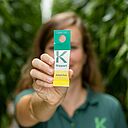
residue on the plant. BioSulfur-S is easy to use. APPLICATION METHOD: Apply 0.32 - 0.64 gal/acre for horticultural or greenhouse plants. Use a sufficient [...] approved Recycling Location. An approach to a higher yield and stronger plants. A unique horticultural and specialty crop fertilizer. READ THE LABEL BEFORE [...] e. Maximum 7 applications per season. Test product on a small number of plants before using. Results may vary from one site to another or in time. NOTICE
to the particular situation. Start introduction preventively soon after planting of the crop. Introduction rates typically range from 0.25-4 per m 2 /release
to the particular situation. Start introduction preventively soon after planting of the crop. Introduction rates typically range from 0.25-2 per m 2 /release
bottle directly on the soil or rockwool slabs or hang it in-between the plants Do not scatter the contents Once emerged, the adult gall-midges will leave
waste when it is taken to a composting plant. Koppert also uses recycled material from automobile manufacturing plants that Koppert uses to produce its bumblebee
Phytotoxicity: Isarid™ has shown plant safety but has not been tested on all varieties. Test Isarid™ on a small number of plants to check for potential damage [...] of Isarid™ per acre of greenhouse plants or nursery crops 2 – 8 oz of Isarid™ per 11,000 sq ft of greenhouse plants or nursery crops applied at a minimum [...] Soil Applications: Prior to planting and at blending: 14 – 28 oz of Isarid™ in 100 gallons of water applied to greenhouse plants or nursery crops as a soil
TRIANUM-G Safety Data Sheet according to Regulation (EC) No. 1907/2006 (REACH) with its amendment Regulation (EU) 2015/830 Issue date: 01/01/2010 Revision date: 08/12/2020 Version: 10.0 SECTION 1: Id
Control pests with beneficial nematodes While plant parasitic nematodes are a common soil pest that affect plants, entomopathogenic nematodes play an important
green areas of stems and pods causing whitening of the crop. Heavily damaged plants appear stunted and will, in most cases, die. On rapeseed, larvae also feed