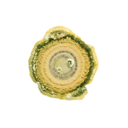
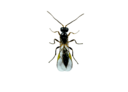
suffice for palms to die. Females lay eggs individually into soft tissues mainly at the base of living fronds. Larvae are present and feed in the softest
out, shrivelled skins are difficult to find. Chrysoperla carnea is active mainly during the night. The larvae hide during the day. Pack size 1,000; 10,000
the pest appears. The success of predatory mites in controlling thrips is mainly dependent on the size of the prey larvae. Thrips larvae try to defend themselves [...] Eggs are laid on the underside of leaves on leaf hairs or in the axils of main and side veins. They are oval, white and have a diameter of approximately
sub-tropical Asia, including India. Damage symptoms Large caterpillars feed mainly on the youngest leaves, producing skeletonized leaves, holes and frass on
damage in the larval stage when it feeds on the roots. First instar larvae mainly feed on small humus particles, second instar larvae on fine roots of grasses
conidiophores in this case also protrude from the stomata. Conidia are the main means of dispersal. They are dispersed by wind, as are the ascospores. In
gypsophila, celery, sweet pepper, pea, bean and potato. In greenhouses, it is mainly found on gerbera and chrysanthemum. Today the insect is widespread across
is stored on your computer by your browser when you visit the website. The main function of cookies is to distinguish one user from the other. Your browser
stem. Gerbera flowers deform and discolour with the leaves turning bronze, mainly along the midrib. Even a mild infestation can cause enormous damage, and
usually found on the lower surface of the leaves, often in the corner of the main vein and lateral veins. It is not possible to distinguish Amblyseius andersoni