Introduction to spider mite management Spider mites are a persistent problem in both agricultural and horticultural settings. These tiny arachnids feed on plant tissues, causing extensive damage that
The predatory mite Neoseiulus californicus (previously Amblyseius californicus) is commonly used for biological pest control of spider mites . Although Neoseiulus californicus prefers spider mites it
What are predatory mites? Predatory mites are beneficial arthropods used in pest control to manage and reduce populations of harmful pests in various agricultural and horticultural settings. These tin
Predatory bugs Predatory bugs are beneficial insects crucial for natural pest control in agriculture. Equipped with piercing mouthparts, they actively hunt and feed on various harmful pests, helping t
Capirel can be used for biological control of various insect pests in orchards, berries, outdoor vegetables and urban trees. Pests Fly larvae ( Diptera ): Sciarid flies ( Lycoriella spp., Bradysia spp
Casea can be used for the biological control of various insect pests in stone fruits, outdoor vegetables and urban trees. Pests Caterpillars (Lepidoptera): Armyworms ( Spodoptera spp.); Cotton bollwor
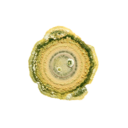
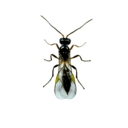
Pests Greenhouse whitefly ( Trialeurodes vaporariorum ); Tobacco whitefly ( Bemisia tabaci ). Mode of action Adult female parasitic wasps parasitize the third and fourth larval stage of the whitefly .
Pests Two-spotted spider mite ( Tetranychus urticae ) and other Tetranychus spp., except Tetranychus evansi . Mode of action Predatory mites use their piercing mouthparts to extract the contents of th
Amblyseius andersoni is a species of predatory mite and is used for biological pest control in horticulture and agriculture. These predatory mites are natural enemies of various pests like thrips , wh
Pests Greenhouse whitefly ( Trialeurodes vaporariorum ); Tobacco whitefly ( Bemisia tabaci ). Mode of action Adult female parasitic wasps parasitize the second and third larval stage of the whitefly .