Life cycle and appearance of Common cockchafer
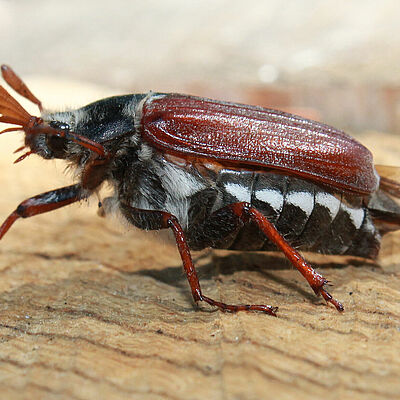
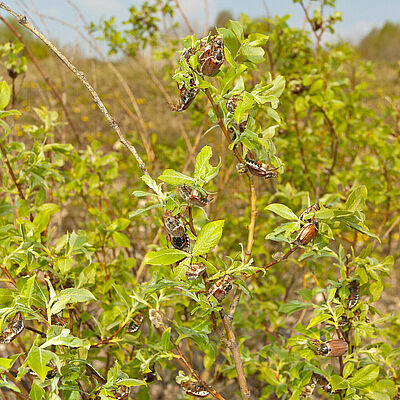
The life cycle of the common cockchafer (Melolontha melolontha) has the following stages: egg, three larval instars, a pupal instar and the adult beetle. The adult beetle is 25 to 30 mm long, with a dark head, black pronotum covered with short hairs, and reddish brown elytra with four longitudinal ribs each. The abdomen is black, with typical triangular white spots below the elytra.
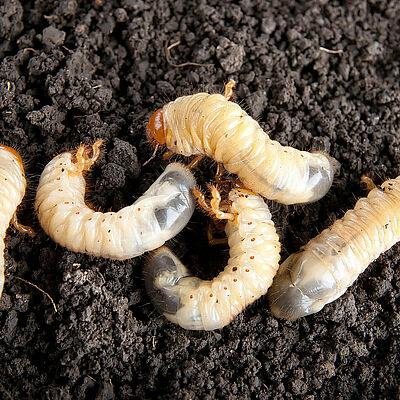
When just laid, the oval eggs of the common cockchafer (Melolontha melolontha) are 2 x 3 mm, but they increase in size by absorbing water. The larvae (grubs) have a whitish curved body, large head, with strong mandibles and long, hairy, well developed yellow legs. It takes three or four years for the larvae to fully develop. The grubs are 10 to 20 mm in the first autumn, 30 to 35 mm by the following autumn, and 40 to 46 mm in the spring of their third year. The pupa is 25 to 35 mm long and whitish brown.