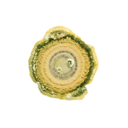
crop residues of infected plants as chlamydospores (thick walled mycelium cells) or mycelium. Survival is also possible on seed, greenhouse structures, tools
greenhouses. Damage symptoms Thrips cause damage to plants by piercing the cells of the surface tissues and sucking out their contents, causing the surrounding
the larva drops to the ground, burying itself and creating a green pupal cell which darkens to brown before emergence of the adult. The number of days
symptoms Damage is caused by the mites sucking out the contents of plant cells. Affected leaves are slightly curled and acquire a silvery sheen on the underside
ornamental crops. Damage symptoms Thrips cause damage to plants by piercing the cells of the surface tissues and sucking out their contents, causing the surrounding
hyphae extend intercellularly, forming haustoria to parasitize mesophyll cells. The latent period (the time from infection to visible symptoms) ranges from
Hyphae from the same AG fuse. When hyphae from different AG’s meet, the cells around the fusion site die. To complicate matters further, subgroups can
crop residues of infected plants, as chlamydospores (thick walled mycelium cells) or mycelium. Survival is also possible on seed, greenhouse structures, tools
Parasitism of pathogens Trianum-P grows around the mycelia of the pathogens. The cell walls of the pathogens break down and the pathogens die. Pack size 500 gram
scales, produce no honeydew. They feed by sucking the contents of epidermal cells, into which they inject toxic substances that cause yellow, red or brown