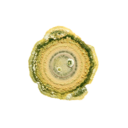
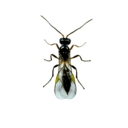
stadia remain flattened on the leaf. The fourth larva stadium develops into a white, oval case encircled by a ring of erect waxy rods. This is called the pupa [...] feed on plant sap very soon after emerging. The insect is covered with a white waxy substance.
occurring between 25–30°C. The small (1.2 mm), white eggs will only hatch if they remain moist, and creamy-white larvae (3–9 mm long) with a single pair of
serve as animal fodder. The most popular clover in this respect are the white clover Trifolium repens and the red clover Trifolium pratense .
cultivars that differ greatly in size, shape and colour. The main colours are white, yellow, orange, red and pink, but one flower can have petals in varying
Finally, white spots appear on the body. A fully grown larva is about 2 mm long. At the end of the last larval stage, the larva spins a white cocoon near [...] or red. Immediately after emerging from the egg, the larva is yellowish white. The eggs and the first larval stages are very difficult to find in the crop
( Duponchelia fovealis ) are light to dark brown with a clearly visible white crinkled line on the forewing. The end of the remarkably long abdomen bends [...] egg. The full-grown caterpillars are 20 to 30 mm long and have a creamy white colour. Along the dorsal surface of the body there are pairs of dark dots
flowering plant. Nowadays, a wide range of other colours is available such as white, purple and red.
brown. On the underside of the leave fluffy growth appears which is first white and later turns grey-brown. This is actually the sporulation of the pathogens
protected by a layer of epicuticular wax. Apples usually have a yellowish-white coloured exocarp. Sometimes their flesh is also pink or yellow.
usually grows on the ground surface first and then ascends. The plant produces white or pink flowers and afterwards sour-tasting red or pink berries. The size