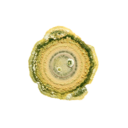
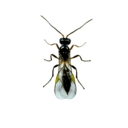
Pests Young larvae of various thrips species. Crops Do not use in tomato. Biological control of thrips - Neoseiulus cucumeris Mode of action Predatory mites pierce their prey with their sucking mouthp
Pests Two-spotted spider mite ( Tetranychus urticae ) and other Tetranychus spp., except Tetranychus evansi . Mode of action Predatory mites leave the sachets and enter the crop. There they pierce the
Pests Leaf miners ( Lyriomyza spp.). Mode of action Adult female parasitic wasps of Diglyphus isaea kill second and third instar leaf miner larvae in the mine and lay their eggs next to them. The eggs
Pests Two-spotted spider mite ( Tetranychus urticae ) and other Tetranychus spp., except Tetranychus evansi . Mode of action Predatory mites pierce their prey with their sucking mouthparts and
Entonem can be used for biological control of various insect pests in protected crops and urban greens. It is effective at low temperatures, thus can also be applied in colder parts of the season. Pes
Whitefly control with the parasitic wasp Eretmocerus eremicus Eretmocerus eremicus is a small parasitic wasp belonging to the family Aphelinidae . This beneficial insect is used as an important biolog
Whitefly control with the parasitic wasp Encarsia formosa Encarsia formosa is a parasitic wasp belonging to the family Aphelinidae , widely recognized for its role in biological control, particularly
Leaf miner control with the parasitic wasp Diglyphus isaea Diglyphus isaea is a small parasitic wasp belonging to the family Eulophidae within the order Hymenoptera . It is widely recognized for its r
Pests Aphids and other pests, like mealybugs , Echinothrips and butterfly and moth eggs. Mode of action Larvae of the lacewing attack their prey and suck their body fluids. Visual effect Prey is sucke
Aphid control with the parasitic wasp Aphidius matricariae Aphidius matricariae is a parasitic wasp belonging to the family Braconidae and is widely recognized for its role in biological pest control