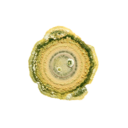
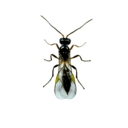
release the pathogenic bacteria they carry with them. These bacteria kill the insect and digest it from the inside. The nematodes feed on the tissues of [...] opportunities the biological control of caterpillars . Our nematode products can be used in conventional, organic or zero residue growing methods in a wide range [...] efficiently in a liquid layer, a dry leaf surface does not stop the nematodes. Depending on climatic conditions, nematodes survive on the leaf surface
shake the bottle gently before use Push the centre of the cap to open the dosage hole Sprinkle material on leaves or pour into Diboxes Make sure the material [...] situation. Start introduction as soon as the first pest mites are detected in the crop. Introduction rates typically range from 2-50 per m2/release. Releases [...] after receipt. If necessary, the product can be stored for 1-2 days. Storage temperature 8-10°C/47-50°F. Storage conditions In the dark, bottle horizontally
label for the full list of crops. Availability NodoKare™ is registered for sale in the following U.S. states and territories: AL, FL, GA, KY, IL, IN, IA, MS
can implement timely and precise solutions, minimizing the risk of yield losses and reducing the need for excessive pesticide or fertilizer use. This not [...] Benefits of crop scouting One of the key benefits of crop scouting is its ability to enable early detection and targeted intervention. By identifying problems [...] to make informed decisions based on real-time field data. By understanding the specific needs of their crops, growers can tailor their management practices
shake the bottle gently before use Push the centre of the cap to open the dosage hole Sprinkle material on leaves or pour into Diboxes Make sure the material [...] Start introduction as soon as the first pest mites are detected in the crop. Introduction rates typically range from 2-50 per m2/release. Releases should [...] after receipt. If necessary, the product can be stored for 1-2 days. Storage temperature 8-10°C/47-50°F. Storage conditions In the dark, bottle horizontally
n is the transfer of pollen from the anthers of the flower to the stigma of the flower. If the pollen is transferred from anther to stigma on the same [...] ation. Cross pollination, is the transfer of pollen from the anther of one flower to the stigma of another flower on the same plant or on another plant [...] when it comes to the production of vegetables, fruit and seed. Well pollinated crops result in considerably higher yields and improve the quality and shelf-life
that are not available in sachets. How to use Dibox Application Fold out the Diboxes Pour the material into the Diboxes Hang the Diboxes close to or at [...] working conditions for Dibox Depending on humidity the Diboxes can be used for multiple introductions of the natural enemies. [...] When to use Dibox Use a Dibox for the application of biological products when it is necessary to apply close to a hotspot. This mainly counts for parasitic
Biocontrol is our Nature The answers to many of today’s agricultural and environmental challenges are already out there: in nature itself. At Koppert, [...] we explore, understand, and apply these natural solutions in partnership with nature. Using natural enemies to control pests, bumblebees for pollination
Koppert established the Koppert Foundation on their 50 th anniversary in 2017. This Foundation aims to contribute to sustainable solutions for horticulture [...] horticulture and agriculture and improvement of the health and availability of food and nutrition for those who need it most. Scope Koppert Foundation focuses [...] smallholder farmers providing education about our wonderful partnering with nature in integrated crop management supporting local Koppert employees with their personal