Maintaining Stock Plants
Most growers see a significant increase in output the first year a Koppert BioSolution is deployed on their stock plant program. Rather than utilizing repetitive pesticide applications that can stunt plant growth, Koppert uses beneficial insects and biopesticides with a proven scientific track record to control pest problems and promote healthy new cutting tissue.
Koppert recommends
Pest control is important for specialty or ship-sensitive stock crops produced in the US. Routine introductions of predators and mycoinsecticides like Isarid™ and Entonem are commonly applied.

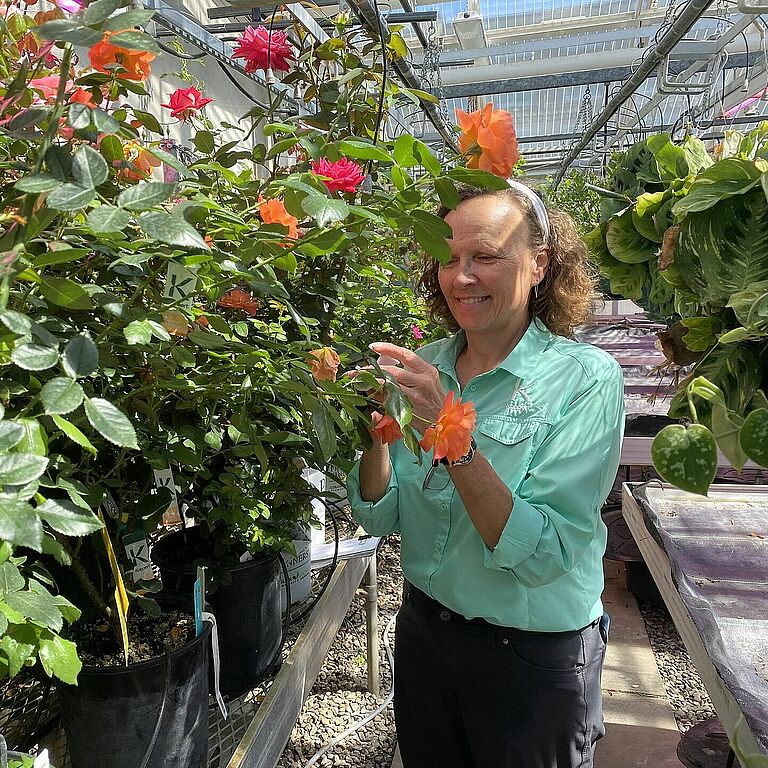
Heidi inspects rose stock her Alma Mater UWRF, following up on Dr Zlesak’s first year success using predatory mites to manage spider mites in his rose breeding program.
Starting Off Humid
Propagation crops—seeds, cuttings, tissue culture—are in their first fragile state while subject to the extremely humid conditions for rooting.
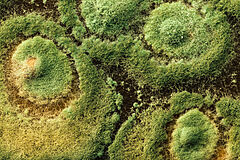
This moisture brings fungus gnats, shore flies, and fungal diseases that can scar the primary root, stunting the plant for its lifetime and interfering with crop uniformity.
Koppert recommends
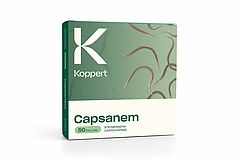
Entonem / Capsanem, Bacilirid™ Biological Fungicide, Isarid™, and Trianum ® Biological Fungicide are BioSolutions that thrive in wet conditions. Using Koppert products instead of chemical controls allows rooted material to stay focused on building strong plants.
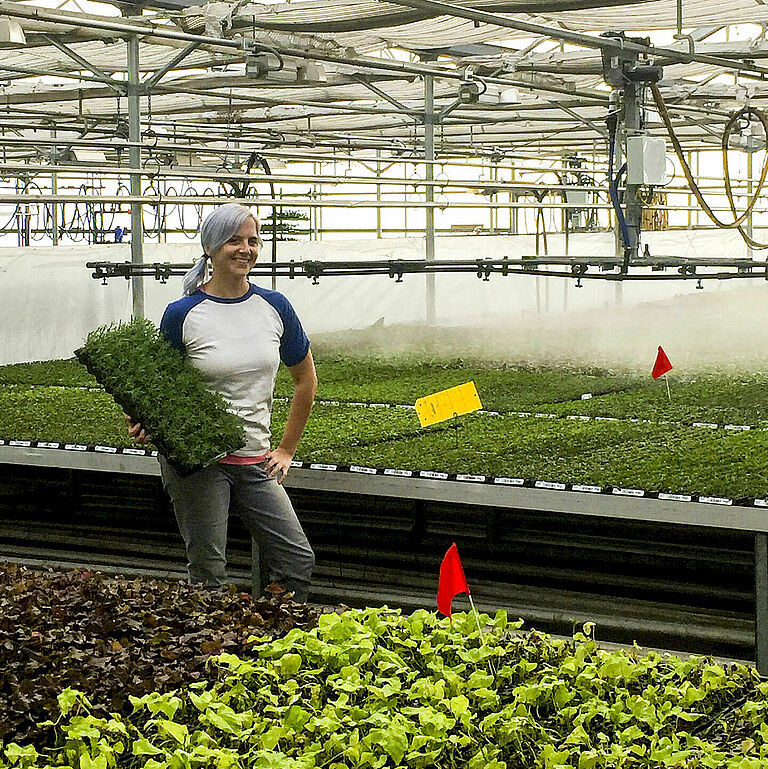
Kristen Fowler ran a propagation greenhouse before joining with Koppert—her propagation roots run deep.
Hardening Off/Drying Down
After the inputs have rooted, the air dries out and the microenvironment changes. Koppert’s strategy adjusts accordingly, as each grower and facility handles things differently in this stage. Your solution is custom designed just for you and your unique pest complex.
Koppert recommends
Predatory mites address pests like spider mites, thrips, and broad mite. Multiple biological and conventional options exist for other common offenders like aphids and whiteflies. Mass-trapping is key in both wet and dry stages, due to the ever present nature of fungus gnats and shoreflies. Sticky cards and tape are essential to controlling the mobile adult phases of these pests.
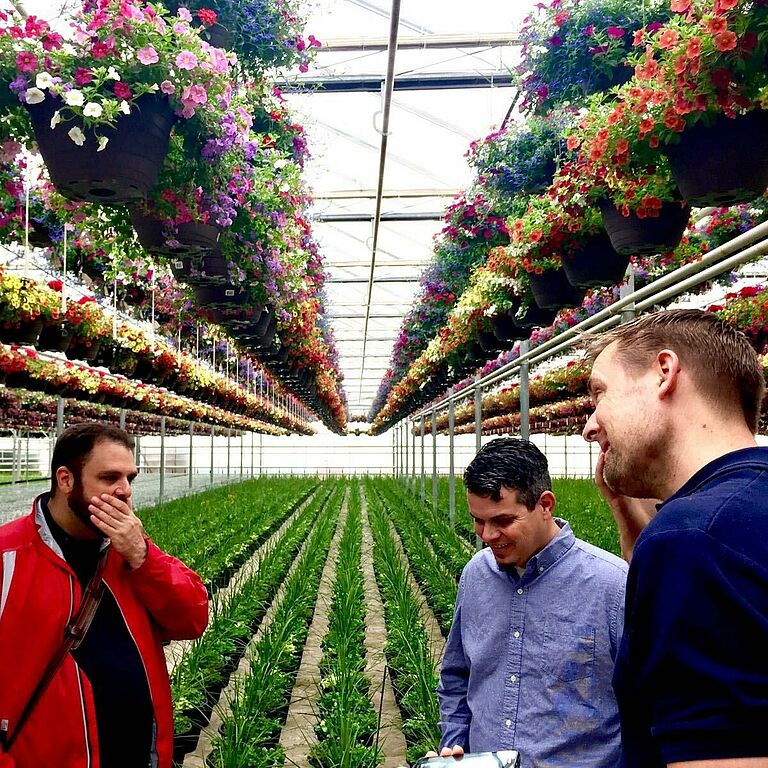
Jeremy Webber (center) with two global Koppert experts brought in to solve a client’s thrips problem.